Anduril Plans Japanese Factory to Bolster Global Defense Production

Anduril Industries’ push into Japan challenges the dominance of legacy defense contractors in Asia-Pacific supply chains. The U.S. startup, known for autonomous hardware systems, eyes local manufacturing to meet surging demand from allies amid regional tensions. Founder Palmer Luckey announced plans for an “Arsenal J” facility, mirroring a massive Ohio plant. This expansion tests whether Silicon Valley agility can scale hardware production without the overruns plaguing traditional firms.
Anduril, valued at over $30 billion, specializes in drones and missile systems using off-the-shelf components for rapid deployment. The Altius-600M drone, a tube-launched loitering munition with 400-kilometer range, exemplifies its approach to cost-effective hardware. Low-cost cruise missiles incorporate commercial sensors and propulsion, reducing unit prices to under $100,000 from millions in legacy equivalents. The company reported $1 billion in 2024 revenue, up 138 percent year-over-year, driven by U.S. contracts for border surveillance and naval drones.
Japan emerges as a strategic hub due to its defense spending surge. Prime Minister Sanae Takaichi’s administration targets 2 percent of GDP by March 2026, accelerating procurement of unmanned systems. Anduril signed a memorandum with Aster, a Yokote-based motor maker founded in 2010 with 116 employees, to assemble products using Aster’s flat wire coil technology for compact actuators. Joint procurement of rare-earth magnets addresses supply vulnerabilities, as Japan controls 60 percent of global refining capacity.
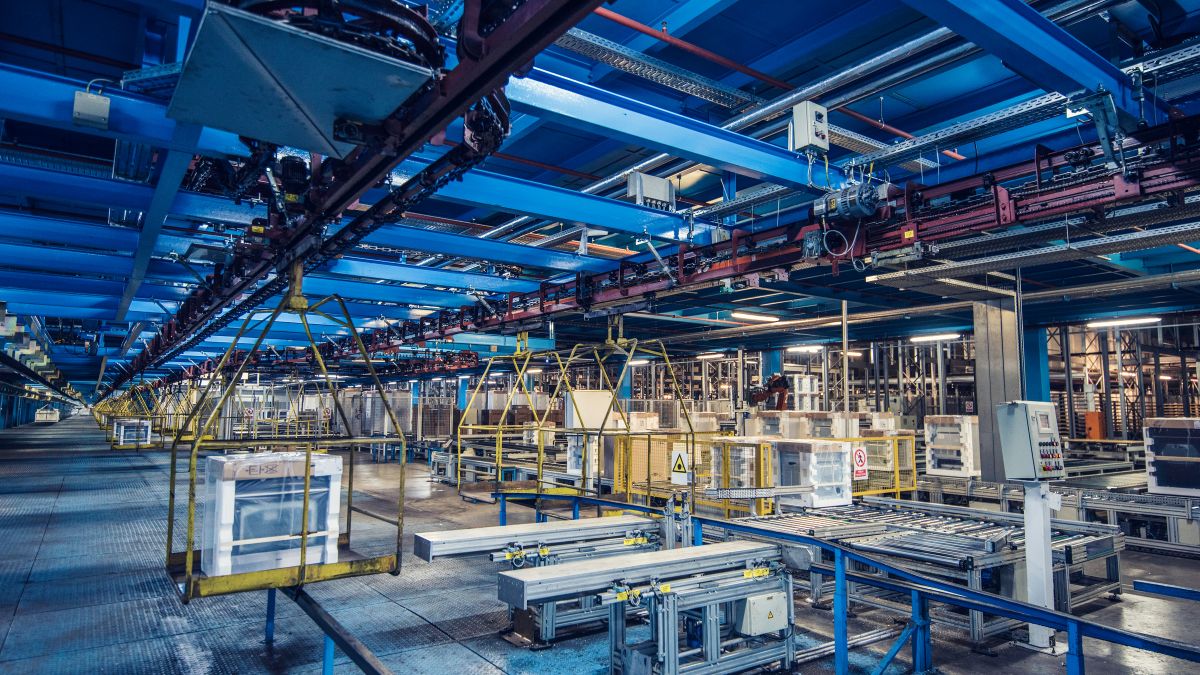
The Ohio blueprint guides Arsenal J’s design. Arsenal One spans one million square meters with $900 million invested, set to produce 10,000 drones annually starting next year. Equipped with robotic assembly lines and 3D printing for airframes, it cuts lead times to 30 days from years. Anduril could adapt existing Japanese facilities if contracts materialize, leveraging partners for dual-use components like avionics shared with automotive suppliers.
U.S. implications extend to export controls and allied interoperability. Anduril’s Ohio site integrates with Raytheon for missile integration, but Japan ties could streamline Foreign Military Sales under the U.S. State Department. Patrick Hollen, Anduril Japan head and ex-Raytheon executive, coordinates with Japan’s Ministry of Economy, Trade and Industry on component standardization. This fosters a resilient supply chain, mitigating risks from China’s dominance in electronics assembly.
Challenges persist in hardware reliability. U.S. Navy trials revealed software glitches in drone boats, while Air Force tests saw Altius crashes due to navigation errors. Luckey addressed critics at the Tokyo event, stating, “Finding bugs was a normal part of the weapons development process.” He added, “Anduril has a very good reputation,” noting military feedback views issues as routine iterations.
Broader startup dynamics in defense hardware intensify competition. Anduril follows Shield AI’s $267 million revenue milestone with unmanned aircraft for the U.S. Marines. Venture funding for such firms hit $5 billion in 2025, per PitchBook, favoring modular designs over bespoke engineering. Japan’s ecosystem, with 1,200 defense suppliers, offers scale but requires navigating export restrictions on sensitive tech like infrared seekers.
For American firms, Anduril’s model signals a shift toward distributed manufacturing. Partnerships abroad reduce domestic bottlenecks, where fabs operate at 95 percent capacity for printed circuit boards. U.S. policy under the CHIPS Act allocates $2 billion for defense semiconductors, potentially subsidizing overseas allies. Yet, reliance on Japanese rare-earths exposes chains to geopolitical flux, as Beijing controls 85 percent of mining.
Anduril’s trajectory underscores startups’ edge in hardware innovation. From a 2017 founding with $17 million seed, it now bids on $10 billion Pentagon programs. Arsenal J could add $500 million in annual output by 2028, per internal projections. Success hinges on securing Japan’s $8 billion unmanned systems budget through 2030. U.S. stakeholders watch closely, as trans-Pacific ties redefine hardware sovereignty in contested domains.