The Race Among AI Chatbots Is Heating Up

ChatGPT has long been the most recognized name in the world of generative AI chatbots. Its popularity made it the go-to option for millions of users seeking quick answers or creative help. Recent trends show its dominance is slipping as competitors gain serious ground. From August 2025 through February 2026, ChatGPT’s share of daily active users among major AI chatbot apps dropped noticeably. In the US market it fell from 57 percent to 42 percent while globally it declined from 73 percent to 57 percent. This shift highlights how the landscape is becoming more competitive every month.
Google Gemini stands out as one of the clearest beneficiaries during this period. Its US daily active user share roughly doubled from 13 percent to 25 percent over those months. On the global stage its share nearly tripled climbing from 9 percent to 25 percent. Gemini now holds a strong second place worldwide. Much of this success comes from Google’s built-in advantages through Android devices and its search engine integration. These distribution channels give it a reach that is tough for others to match and they continue to drive steady user growth.
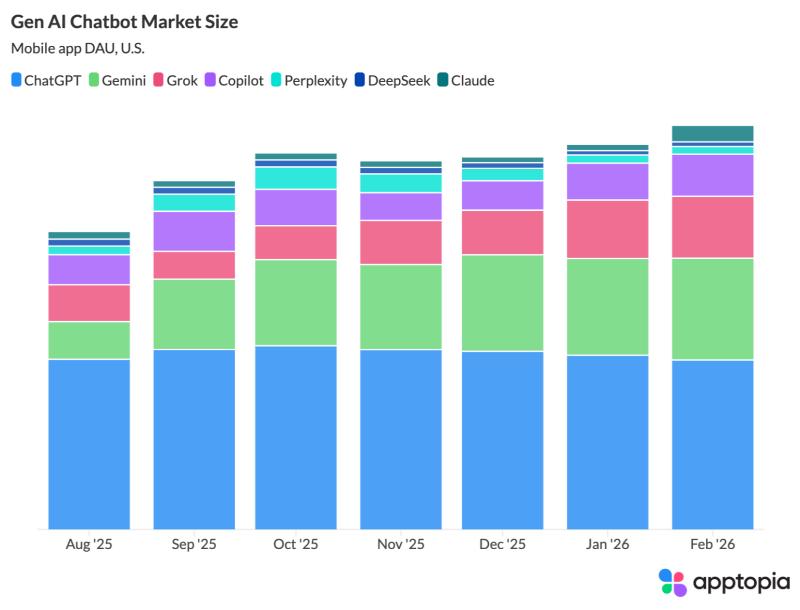
Claude experienced the most explosive surge especially in February. Its US daily active user share tripled in just one month moving from about 1.5 percent in January to nearly 4 percent. Globally the figure doubled during the same window. User retention improved dramatically with churn dropping from 55 percent in August to 36 percent by February. This marked the biggest retention gain among tracked apps. Claude even topped the US iOS App Store rankings for generative AI chatbots on February 28 marking its first time at number one. Daily downloads that day and the next outpaced every rival except ChatGPT. Product improvements and targeted app promotion campaigns fueled much of this rise rather than any single external event.
Grok from xAI has shown consistent upward momentum tied closely to the X platform. In the US its share grew from 12 percent to more than 15 percent while globally it rose from 4 percent to 6 percent. The pattern makes sense given X’s strong presence in the US but worldwide gains point to broader appeal. Grok’s churn rate improved by seven percentage points settling around 36 percent. Average daily time spent in the app jumped from under 14 minutes to nearly 22 minutes indicating users are sticking around longer for conversations. This engagement boost suggests Grok is carving out a dedicated following even as it competes against bigger names.
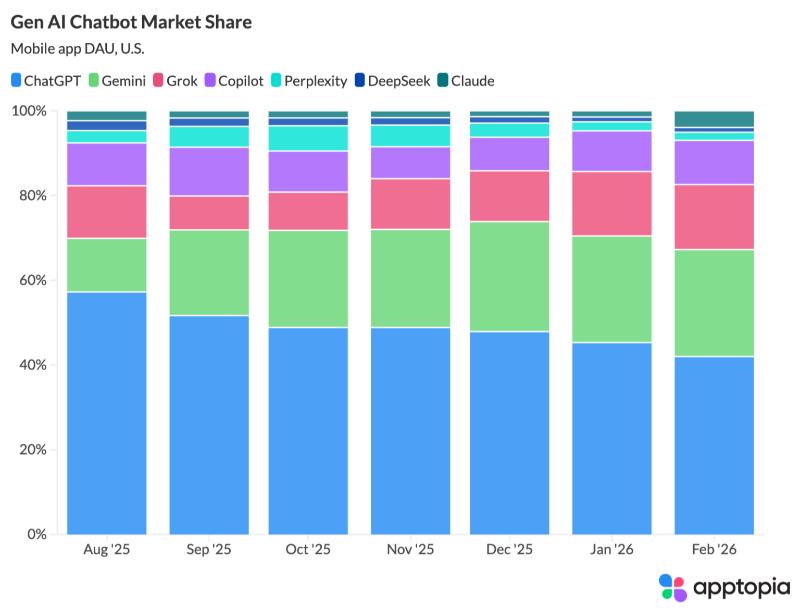
Other players have faced mixed results in this evolving market. Perplexity hit a high point with about 6 percent US share in October but then slipped below 2 percent. Its global position weakened from a peak near 8 percent to roughly 4 percent. Microsoft Copilot has remained fairly stable in the US hovering around 10 percent though its global share dipped slightly. These variations show how no single approach guarantees lasting success in such a fast-moving field.
The bigger picture reveals a fragmenting market where one app no longer commands the majority of attention. Six months ago ChatGPT controlled nearly all daily usage in many regions. Today no chatbot holds more than 50 percent share in the US. Gemini leverages unmatched distribution Claude focuses on better retention and Grok builds deeper user engagement. Each brings credible challenges to the old order and keeps the competition lively.
What do you think about the current state of the AI chatbot race and which one are you using most these days in the comments?