High Concentrations of Organic Compounds on Mars Suggest Biological Origin

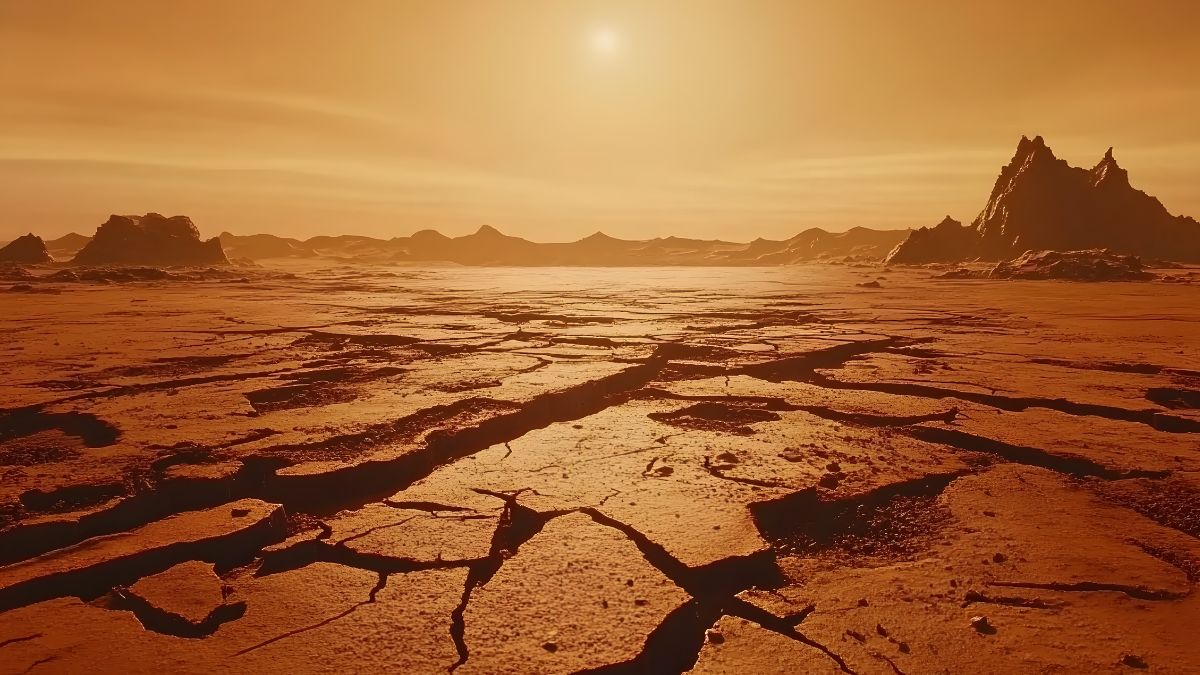
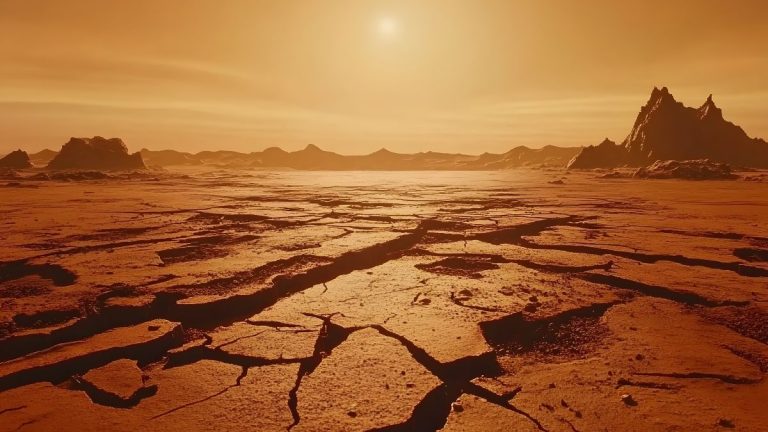
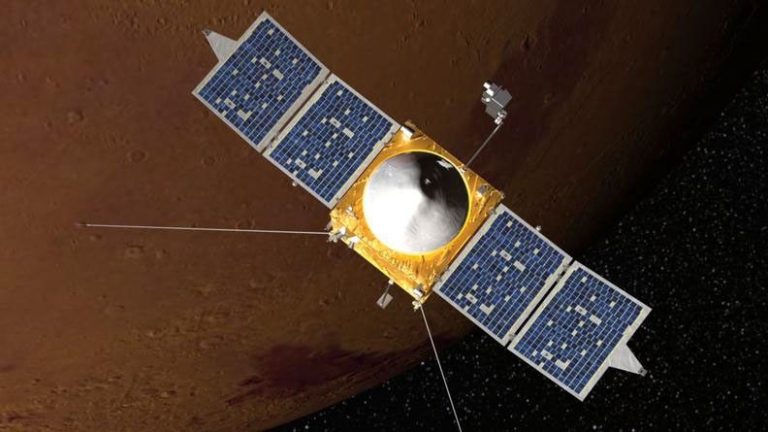
NASA’s Curiosity rover has uncovered intriguing evidence in the Gale Crater that challenges our understanding of organic chemistry on the Red Planet. In March 2025, scientists reported detecting the largest organic molecules ever found on Mars inside rock samples from an ancient mudstone. These compounds, including decane, undecane, and dodecane, appear to be fragments of longer-chain molecules such as fatty acids preserved in sediment laid down billions of years ago when the area held liquid water. On Earth, fatty acids are most commonly produced by living organisms, though non-living geological processes can create them in smaller amounts. This discovery alone sparked excitement but left open the question of whether biology or abiotic chemistry was responsible.
Researchers could not settle the debate using Curiosity’s onboard data, so a follow-up study delved deeper into possible non-biological explanations. Led by Alexander Pavlov from NASA’s Goddard Space Flight Center, the team combined laboratory experiments simulating cosmic radiation damage with mathematical modeling to reconstruct the original abundance of these organics. They effectively rewound the clock by about 80 million years to estimate how much material existed before surface radiation broke it down after Mars lost much of its protective atmosphere. The analysis focused on the Cumberland mudstone sample and accounted for degradation rates under harsh Martian conditions.
The results were striking and pointed to remarkably high original concentrations. Conservative estimates placed the levels of long-chain alkanes or their fatty acid precursors between 120 and 7,700 parts per million in the ancient rock. These figures far exceed what known non-biological sources, such as meteorite delivery or simple geochemical reactions on early Mars, could reasonably produce. The team carefully evaluated alternatives like impacts from space rocks or volcanic activity, yet none matched the inferred quantities without invoking additional unknown processes. This gap strengthens the case that biological activity might have contributed to the organic buildup in what was once a habitable lake environment.
Scientists remain cautious about jumping to conclusions despite the compelling numbers. They stress that extraordinary claims, like evidence of past life, demand extraordinary proof, echoing Carl Sagan’s famous principle. Current findings offer strong support for a biological hypothesis but fall short of definitive confirmation, as multiple independent lines of evidence are needed in astrobiology. Ongoing work will refine our knowledge of how organic molecules survive and degrade in the extreme Martian environment, helping future missions interpret similar detections more accurately. Missions like Perseverance continue to build on this foundation by exploring other sites for complementary clues.
What do you think about these findings pointing toward ancient life on Mars—share your thoughts in the comments.