NASA Delays The Artemis II Mission Launch Until March Following Testing Challenges

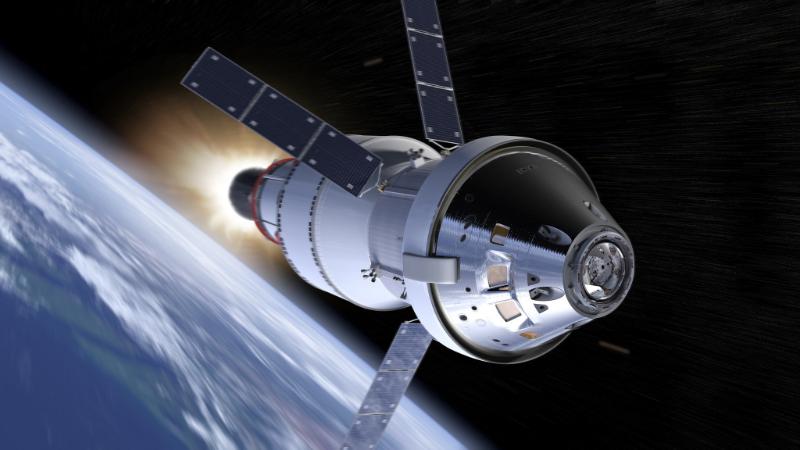
NASA recently announced a significant change to the schedule for its upcoming lunar voyage. The agency decided to push back the launch of the ‘Artemis II’ mission to March of this year. This decision followed a series of evaluations and tests that revealed several technical hurdles. Officials emphasized that the extra time is necessary to ensure the safety of the four astronauts chosen for this journey. Everything is being handled with extreme caution to avoid any potential risks during the flight.
The delay stems primarily from issues identified during environmental testing of the Orion spacecraft. Engineers discovered problems within the capsule battery systems and the life support hardware that required immediate attention. Specifically some of the electronics responsible for air purification and internal climate control did not meet the strict safety standards. NASA Administrator Bill Nelson stated that crew safety remains the top priority for every mission. He wants to ensure that every system works perfectly before the team leaves the planet.
The crew for this historic mission includes Commander Reid Wiseman and Pilot Victor Glover along with Mission Specialists Christina Koch and Jeremy Hansen. They have been training extensively for this flight which will take them around the moon and back to earth. This will be the first time humans have traveled to the lunar vicinity since the end of the Apollo program. The astronauts are currently working through revised training schedules to accommodate the new timeline. Their readiness is a testament to the dedication of the entire space program.
Deputy Associate Administrator Amit Kshatriya explained that the complexity of the integrated systems on Orion requires a cautious approach. Testing revealed that certain parts of the thermal protection system and the heat shield might not withstand the harsh conditions of deep space as initially expected. Replacing these parts involves disassembling portions of the capsule which is a time consuming process. NASA wants to be absolutely certain that every backup system is fully functional before liftoff. The team is working around the clock to address these specific technical concerns.
This mission is expected to cover a distance of thousands of miles as it loops around the moon. The journey will test the limits of the Orion spacecraft in a way that previous uncrewed flights could not achieve. Ground teams are analyzing data from every simulated flight to predict how the craft will behave in real time. These simulations are vital for preparing the mission control staff for any possible emergency. Every mile traveled will provide invaluable data for future deep space exploration.
The space agency is also coordinating with commercial partners like Lockheed Martin and SpaceX to ensure all hardware is ready. These companies are responsible for various segments of the mission including the rocket boosters and the recovery systems. While the March date is now the official target the team will continue to monitor the progress of repairs and testing closely. The world is watching as the next chapter of human exploration prepares to begin. Please share your thoughts on the future of lunar exploration in the comments.