NASA Artemis II Crew Rehearses Launch Day Procedures

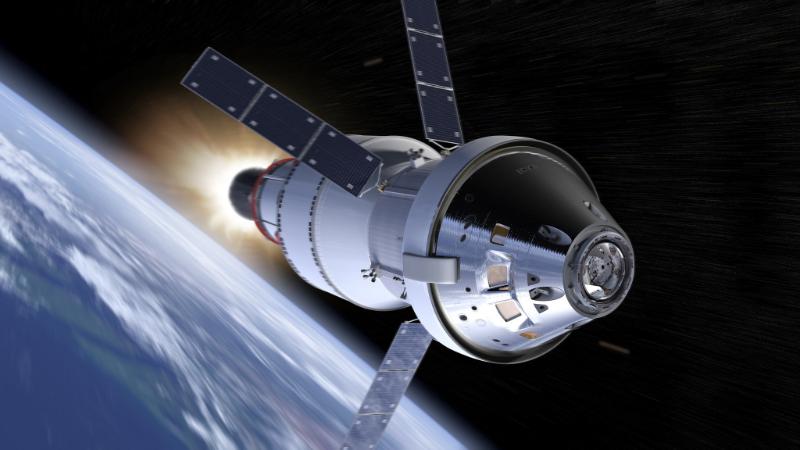
NASA’s Artemis II astronauts have completed a full dress rehearsal at Kennedy Space Center, suiting up and boarding the Orion spacecraft to simulate launch day operations. The four crew members—Reid Wiseman, Victor Glover, Christina Koch, and Canadian Space Agency astronaut Jeremy Hansen—practiced emergency scenarios and crew access arm procedures inside the Vehicle Assembly Building. This milestone follows the retraction of platforms around the fully stacked Space Launch System rocket and Orion, clearing the path for potential rollout to Launch Pad 39B. The exercise validates ground systems integration and crew familiarity with ascent protocols ahead of the mission’s targeted February 2026 liftoff. Artemis II will send humans beyond low Earth orbit for the first time since 1972.
The rehearsal included donning Axiom Space extravehicular mobility units and executing timed sequences for pad evacuation drills. Crew members traversed the crew access arm, entered Orion through the side hatch, and strapped into their seats while ground teams monitored communications and life support systems. This end-to-end test incorporates lessons from Artemis I’s uncrewed flight, focusing on heat shield performance and environmental control refinements. Engineers confirmed Orion’s docking mechanisms and manual piloting interfaces function as designed. The process ensures seamless coordination between astronauts, launch control, and recovery teams.
Artemis II’s Space Launch System rocket features Block 1 configuration with four RS-25 engines and twin solid rocket boosters capable of producing 8.8 million pounds of thrust. Orion spacecraft integration includes an upgraded European Service Module providing propulsion, power, and thermal control for the 10-day lunar flyby trajectory. The mission profile involves a hybrid free-return path, reaching approximately 240,000 miles from Earth before splashing down in the Pacific Ocean. Data collected will inform crew radiation exposure models and deep space navigation accuracy.
This rehearsal advances NASA’s exploration roadmap, testing systems essential for sustained lunar presence under subsequent Artemis missions. Ground teams have powered on Orion’s avionics and verified interfaces with the rocket’s core stage and interim cryogenic propulsion stage. The exercise also supports certification of new lunar spacesuits designed for surface operations on later flights. Successful completion reduces risks associated with gravitational transitions and manual control during critical phases.
Broader preparations include booster static fire tests and hybrid rocket motor evaluations to enhance future SLS variants. Artemis II’s crew selection emphasizes diversity, with Koch poised to become the first woman and Glover the first person of color to travel beyond low Earth orbit. The mission builds on 25 years of International Space Station operations, leveraging microgravity research for long-duration flight countermeasures. These efforts position NASA for eventual crewed Mars missions by validating deep space habitation technologies.