Scientists Identify A Bizarre Lemon Shaped Planet Where It Rains Diamonds

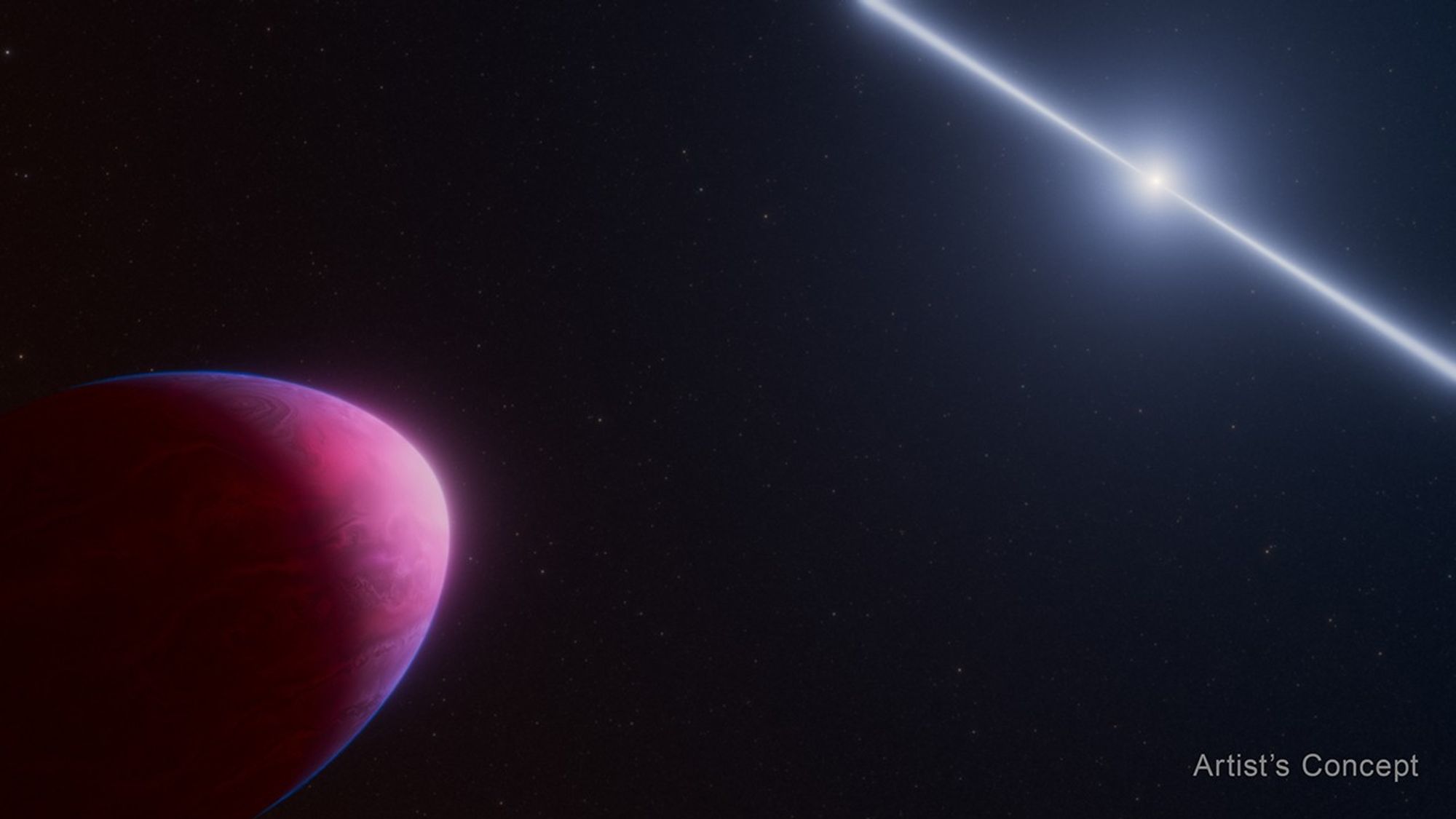
Astronomers have officially classified a distant world that defies the standard rules of planetary formation. We usually expect massive planets to be spherical spheres due to their own gravity. This newly analyzed object resembles the shape of a lemon or a rugby ball rather than a round ball. The deformation is the direct result of extreme gravitational interactions with its parent star.
The planet is known scientifically as WASP-103b and it sits in the constellation Hercules. It is located roughly a thousand light years away from Earth. The massive gas giant orbits its star in less than one Earth day. This close proximity causes massive tidal forces that pull on the atmosphere and stretch the planet at its equator.
Researchers utilized the Cheops space telescope to observe the subtle transit signals. This high precision instrument allowed them to measure the Love number which indicates how mass is distributed inside a planet. Susana Barros from the Institute of Astrophysics and Space Sciences led the study. She explained that the incredible tidal pull determines the internal structure and final shape of this gas giant.
The findings reveal that WASP-103b is inflated significantly compared to Jupiter. Its interior must be tenuous enough to be distorted by the gravity of the host star. If the planet were more rigid it would not display such a dramatic lemon shape. This confirms that the internal density is vastly different from the gas giants we see in our own solar system.
Another fascinating aspect of this world is the potential for exotic weather patterns. The extreme pressure and carbon rich atmosphere could theoretically support the creation of diamonds. While it sounds like something out of the movie ‘Titan A.E.’ or other science fiction stories, high pressure physics makes it possible. This precipitation would occur deep within the volatile atmosphere where temperatures are scorching.
Jacques Laskar of the Paris Observatory also contributed to the analysis of the orbital dynamics. He noted that the tidal interactions usually cause a planet to spiral inward toward the star. However it appears that WASP-103b is drifting away rather than falling to its doom. This unexpected movement suggests that future observations are necessary to solve the mystery of its orbit.
The James Webb Space Telescope is expected to provide further insights into this strange world. Astronomers are eager to analyze the exact chemical composition of the atmosphere to verify the diamond rain theory. Detailed spectral analysis will tell us more about the winds and thermal inversions present there. Every new piece of data helps refine our models of hot Jupiters.
This discovery serves as a reminder that the galaxy is full of surprises waiting to be found. WASP-103b stands as a testament to the strange physics that govern worlds close to their stars. We are entering a golden age of exoplanet characterization. The universe continues to provide puzzles that challenge our imagination.
Please let us know what you think about this strangely shaped planet and its diamond rain in the comments.