U.S. Condemns Chinese Radar Lock-Ons Against Japanese Military Aircraft in East China Sea


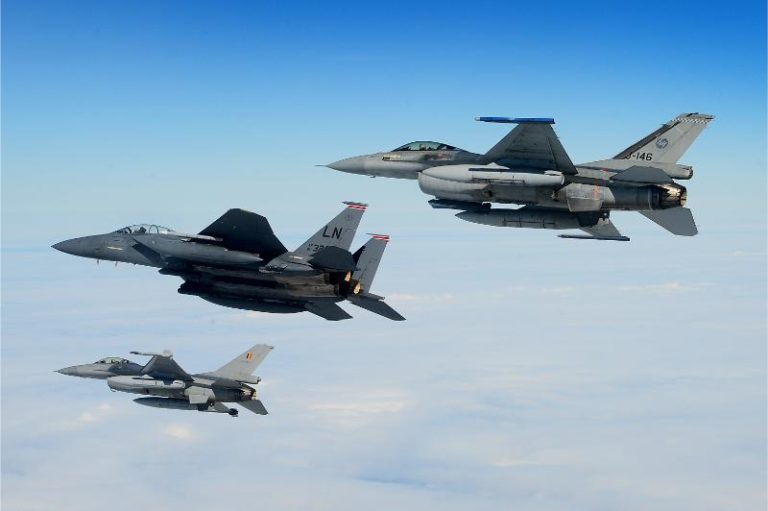
The United States has issued its first official condemnation of China for directing fire-control radars at Japanese military aircraft during a routine training exercise in the East China Sea, escalating diplomatic tensions over disputed airspace. The incident, involving Chinese J-11 fighters targeting Japanese F-15s with Type 1475 radars capable of guiding missiles up to 100 kilometers, occurred on December 7, 2025, and prompted Tokyo to file a formal protest with Beijing. U.S. Indo-Pacific Command described the actions as “unprofessional and unsafe,” reaffirming commitments under the 1960 Treaty of Mutual Cooperation and Security to defend Japan against such provocations.
This marks a departure from prior U.S. reticence on similar radar incidents, with State Department spokesperson Matthew Miller stating on December 10 that the behavior “endangers regional stability and contravenes international norms for military aviation.” The radars, operating in X-band frequencies with 5-degree beamwidths, locked onto the Japanese jets for 12 seconds each across three encounters, according to Japan’s Self-Defense Forces telemetry. Beijing countered that the flights intruded into its air defense identification zone without prior notification, justifying the locks as defensive measures under its 2013 ADIZ declaration.
The episode unfolds amid heightened U.S.-Japan military interoperability, including joint exercises under the Pacific Deterrence Initiative that deployed 50 F-35B Lightning IIs to Kadena Air Base in Okinawa. U.S. Pacific Air Forces monitors such zones with E-3 Sentry AWACS platforms, which detected the radar emissions at 30-megahertz pulse repetition frequencies. Analysts at the Center for Strategic and International Studies note that repeated locks could precipitate miscalculations, as seen in the 2001 Hainan Island collision where similar radar use preceded a mid-air crash.
Broader context includes China’s deployment of 120 J-20 Mighty Dragons along the first island chain, equipped with AESA radars boasting 2,000 transmit-receive modules for stealth detection. The U.S. response aligns with the 2025 National Defense Strategy’s emphasis on integrated deterrence, incorporating electronic warfare assets like EA-18G Growlers to jam such systems during freedom-of-navigation operations. Japanese Foreign Minister Sanae Takaichi, who recently labeled a Taiwan contingency a “survival-threatening situation” for Tokyo, briefed U.S. Ambassador Rahm Emanuel on the details, prompting bilateral tabletop simulations of escalation scenarios.
Technological countermeasures feature in U.S. upgrades to the AN/ALQ-249 Next Generation Electronic Warfare system, which disrupts radar locks via digital radio-frequency memory jamming across 0.5-18 gigahertz bands. The incident has spurred calls for enhanced data-sharing under the Quadrilateral Security Dialogue, where Australia and India contribute SIGINT from P-8A Poseidons and Rafale fighters. Pentagon assessments indicate that unchecked radar aggressions could shorten crisis timelines from hours to minutes in contested domains.
Diplomatic fallout includes Beijing’s travel advisory against visiting Japan and demands for Takaichi to retract her Taiwan remarks, which frame potential Chinese actions as existential threats invoking Article 5. U.S. congressional leaders, including Senate Armed Services Committee Chair Roger Wicker, urged swift sanctions on Chinese radar exporters under the Export Control Reform Act. This event underscores vulnerabilities in sensor fusion, where AI-driven threat prioritization in F-15J upgrades processes radar warnings in under 200 milliseconds.
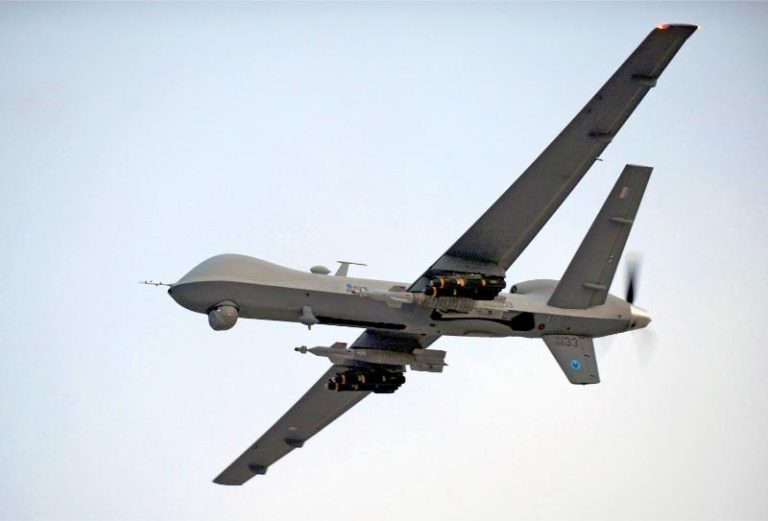
Future mitigations may involve deploying MQ-9B SkyGuardian drones for persistent ISR in the zone, equipped with Lynx multi-mode radars offering 360-degree coverage. The U.S. has accelerated deliveries of SM-6 missiles to Japan, compatible with Aegis Ashore systems for anti-air intercepts at 370 kilometers. As East Asian militaries modernize, such incidents highlight the fragility of de-escalation protocols, with RAND simulations projecting a 25% risk of kinetic exchange from radar escalations.
This confrontation reinforces U.S. strategic pivots, allocating $8.5 billion in the FY2026 budget for Indo-Pacific enablers like hypersonic countermeasures. Joint U.S.-Japan patrols using Link-16 datalinks ensure real-time radar track sharing, bolstering collective defense. The episode signals a new phase in gray-zone coercion, where non-kinetic radar uses test alliance resolve without crossing overt thresholds.