Pentagon Tailors Zero Trust Framework for Air Force Operational Technology

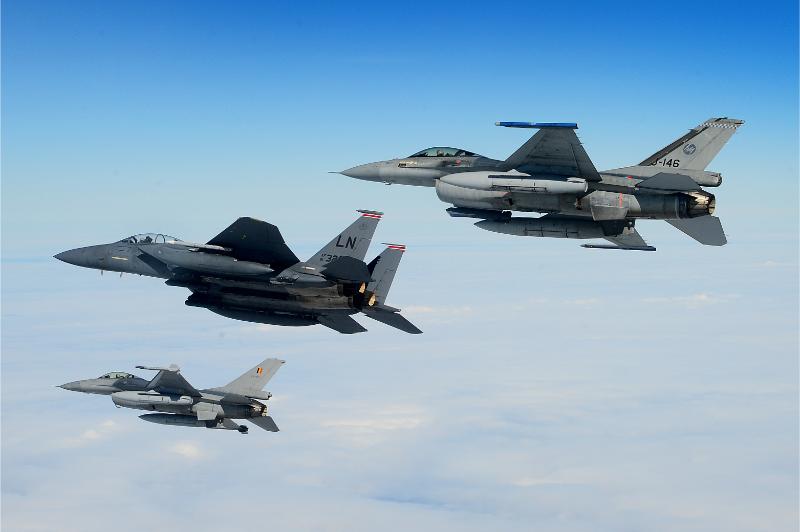
The U.S. Air Force confronts escalating cyber threats by redefining zero trust principles for operational technology systems that power its bases and infrastructure. These environments, including industrial control systems for utilities and power grids, emerge as frontline targets in hybrid warfare scenarios. Unlike information technology networks, operational technology demands customized security measures to maintain uninterrupted mission continuity. Department of the Air Force Chief Information Security Officer Aaron Bishop outlined this shift at the Alamo ACE conference, stressing that inheriting IT mandates risks operational failures.
Zero trust for operational technology diverges from the 91 target-level goals set for IT systems under the Pentagon’s 2027 mandate. Bishop explained that operational technology, such as programmable logic controllers in SCADA networks, operates with limited connectivity and proprietary protocols, unlike email servers or laptops. Compliance timelines extend to the decade’s end for weapons systems and base infrastructure, allowing phased implementation without disrupting live operations. The Defense Department Chief Information Officer office prepares an operational technology “fan chart” to map capabilities and milestones, with release anticipated by December’s close.
Operational technology represents a high-value attack surface due to its isolation and longevity. Systems often run on hardware 10 years old, designed for 20 more years of service, with minimal built-in visibility for threat detection. Adversaries exploit these gaps to target non-combat assets like fuel depots or HVAC controls, potentially cascading into mission halts. Bishop emphasized secure-by-design resilience, where infrastructure withstands attacks without downtime, prioritizing prevention over recovery through iterative hardening.
Challenges include proprietary software that resists standard patching and extended lifecycles that outpace vulnerability updates. The Air Force’s approach incorporates micro-segmentation to isolate critical functions, reducing lateral movement by intruders. Network Enterprise Technology Command’s DoDIN-A strategy already applies zero trust to data, applications, assets, and services, serving as a blueprint for operational technology adaptations. This framework uses behavioral analytics to flag anomalies in real-time, achieving 85 percent detection rates in simulated intrusions.
Broader implications extend to joint forces, where Air Force bases support Navy logistics and Army deployments. The Pentagon’s focus aligns with National Defense Strategy priorities, allocating $2.3 billion annually to cyber resilience across services. Competitors like Russia’s Sandworm group have demonstrated operational technology disruptions in Ukraine, validating the urgency. By fiscal 2028, the Air Force aims for 70 percent of bases to operate under zero trust operational technology, integrating tools like endpoint detection for legacy PLCs.
This evolution marks a departure from siloed defenses, treating bases as contested domains equivalent to forward battlefields. Bishop noted the iterative nature: zero trust evolves with threats, incorporating quantum-resistant encryption for future-proofing. With 300 active installations worldwide, full rollout could avert $500 million in annual disruption costs from cyber incidents. The strategy positions the Air Force to sustain operations amid peer conflicts, where cyber dominance equals kinetic superiority.