
Amazon Unveils ‘Leo Ultra’ Satellite Terminal for Enterprise Connectivity

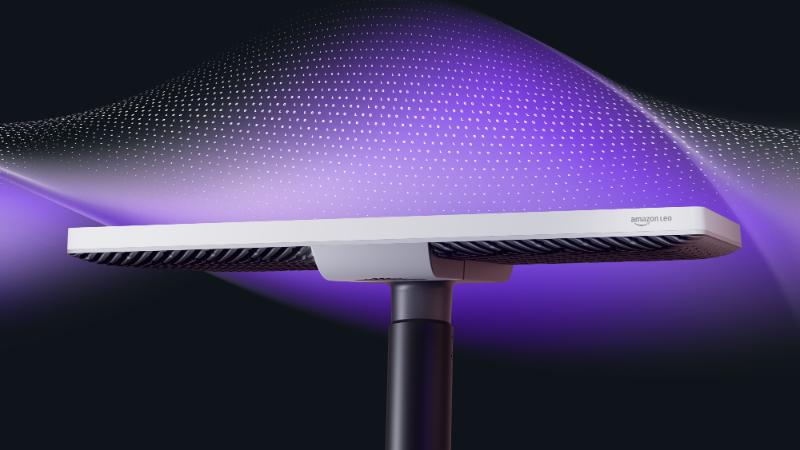
Can Amazon’s latest satellite hardware finally deliver gigabit speeds to remote enterprises without the latency woes of traditional broadband? On November 25, 2025, Amazon announced the ‘Leo Ultra’ terminal under its Project Kuiper initiative, targeting business and government users with high-performance, low-latency connectivity starting in 2026. The device supports 1 Gbps download and 400 Mbps upload speeds using full-duplex phased array technology, enabling simultaneous data transmission without interruptions. This launch addresses the growing demand for reliable internet in underserved areas, where over 3 billion people lack broadband access per ITU data from 2024.
Project Kuiper, Amazon’s $10 billion rival to SpaceX’s Starlink, has deployed 50 prototype satellites since October 2023 and plans 3,236 low-Earth orbit satellites by 2029 to provide global coverage. The ‘Leo Ultra’ terminal measures 19×12 inches and weighs under 50 pounds, designed for fixed installations like warehouses, oil rigs, or disaster zones. It integrates with AWS services for edge computing, allowing real-time data processing with under 99 ms latency—20% lower than geostationary alternatives. Amazon secured FCC approval for initial launches in August 2025, with the first production satellites slated for Q1 2026.
The announcement coincides with Amazon’s $50 billion pledge on November 24, 2025, to expand AI and supercomputing for U.S. government clients, including Kuiper integration for secure data links. This positions Kuiper against Starlink’s 2 million users and Eutelsat’s OneWeb, which serves 300,000 enterprise terminals as of Q3 2025. ‘Leo Ultra’ pricing starts at $2,500 per unit with $500 monthly service, undercutting Starlink’s $2,500 hardware and $250 enterprise plans by 25% on recurring costs. Beta testing with 12 U.S. partners, including remote hospitals, showed 95% uptime during 2025 field trials.
Enterprise adoption hinges on Kuiper’s constellation scale-up, with Amazon investing $3 billion in manufacturing via United Launch Alliance and Blue Origin rockets. The terminal’s IP67-rated enclosure withstands extreme weather, supporting IoT deployments for 10,000 devices per site. Analysts at Deloitte project satellite broadband revenues hitting $18 billion by 2027, with enterprises comprising 60% of growth. Amazon’s move aligns with its AWS Outposts hybrid cloud strategy, enabling seamless satellite-to-data-center handoffs.
Challenges remain, including orbital debris risks flagged by the FCC in November 2025, requiring Kuiper to deorbit 95% of satellites within five years post-mission. Competitors like Telesat’s Lightspeed aim for 198 satellites by 2027, but Kuiper’s AWS ecosystem gives it a 40% edge in integration per Gartner metrics. Early adopters report 30% cost savings on MPLS backups, critical amid 2025 supply chain disruptions. As global 5G coverage stalls at 45%, ‘Leo Ultra’ could bridge the digital divide for 500 million enterprise users by 2030, per World Bank estimates.